Description
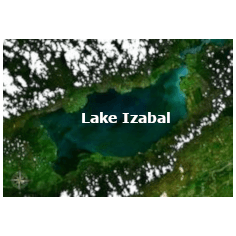
Freshwater coastal lakes are vital ecosystems worldwide but are vulnerable to climate change-induced marine inundation. Given the relative stability of sea level over the past 6000 years, older sedimentary records in low-lying coastal lakes are well-suited to study the effects of sea level rise on freshwater ecosystems and their biodiversity. Study of a 760-cm-long sediment core from Lake Izabal, the largest freshwater ecosystem of Guatemala and third in Central America, suggested a sea-level jump at ~8400 cal yr BP. Through a comprehensive analysis of lake sediment cores and surface sediment samples distributed along a salinity gradient from west to east in the Izabal/Golfete system, COASTAL-GRADIENT will generate high-resolution biological data to gain insights into the effects of abrupt and gradual environmental changes and ecosystem recovery during the las ~12 kyr. The project will allow to also understand the modern hydrological dynamics and effects of the seasonal incursion of marine waters on diversity and ecological response of aquatic communities. Ostracode and foraminifera analyses along with sediment composition, and element geochemistry will allow us addressing the following questions: (1) How do spatial and seasonal variations in salinity and temperature associated with seasonal marine incursions influence thermal stratification, oxygen dynamics, and consequently, the diversity and distribution of aquatic communities in the Izabal/Golfete system? (2) How did aquatic diversity respond to abrupt and gradual environmental change and how was the ecosystem recovery following a marine inundation event during the Holocene? COASTAL-GRADIENT will serve as the modern ecological calibration for the ICDP (International Continental Scientific Drilling Program) project LIBRE “The Lake Izabal Basin Research Endeavor”. The basin contains the longest known continental record of climate, and environmental change in the transitional zone between the Nearctic and Neotropics, extending beyond 10 Myr. We will thus provide a basis and opportunity to model and understand how similar coastal freshwater ecosystems will respond to ongoing sea level rise in the future.