Beschreibung
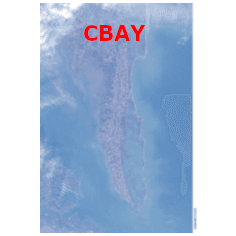
The late Eocene Chesapeake Bay impact structure is among the largest and best preserved of the known impact craters on Earth. We propose a multidisciplinary and international drilling project at this crater, involving an international research team. Research topics include studies of impact processes, regional basin evolution (comparing impact effects with “normal” effects produced by tectonics, global sea-level, and sediment supply on a passive continental margin), hydrogeology, borehole and regional geophysics, and the deep biosphere. The subsurface structure of the Chesapeake Bay crater is constrained by several shallow coreholes, over 2,000 km of marine seismic-reflection surveys, and gravity analyses. Major subdivisions of the structure are a circa 38-km-diameter central crater enclosed by a 24-km-wide annular trough. Several characteristics make the Chesapeake Bay structure unique among subaerial and submarine impact craters on Earth because: (1) it is associated with the North American tektite strewn field, (2) it had a multi-layered, (rheologically varied) marine target, (3) it is a well-preserved and relatively young structure compared to most large terrestrial craters, (4) its location on a passive continental margin has prevented the tectonic disruption that is typical of many large terrestrial craters, (5) its original location on a relatively deep continental shelf allowed marine deposition to resume immediately and bury it rapidly and completely, thereby preventing subsequent erosion; (6) the upper part of the breccia section inside the crater was derived from resurge currents and impact-generated tsunami waves, (7) the breccia body contains a large volume of impact-generated brine, and (8) the crater underlies a densely populated urban corridor, whose two million citizens are still affected by crater-related phenomena, specifically the presence of salty ground water within the structure. Thus, we propose to drill a 2.2-km-deep corehole near the central uplift within the “moat” of the structure’s central crater (as defined from seismic and gravity data), to obtain as thick and undisturbed a post-impact succession as possible, and a thick section of impactites (hopefully including impact melt rocks), and to reach the sub-crater basement to study the shock barometry and fracturing of these rocks.