Beschreibung
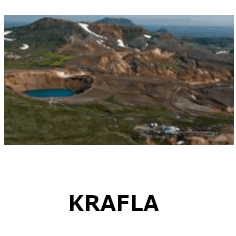
Magma, or more generally the hypersolidus regime defined by silicate melt being present, is responsible for the chemical differentiation of Planet Earth, including formation its crust and transport of volatiles to the hydrosphere and atmosphere. Melt extraction from crystal-rich systems and/or crystal extraction from melt-rich systems drives the mobile portion of systems towards granite. Such chemically evolved rocks are the defining feature of continental crust, whose buoyancy makes continents unsubductable and therefore permanent. Stacked magma advection, hydrothermal convection systems – best developed in calderas - carry the threat to society of natural disaster through explosive eruptions, but also bring geothermal and mineral resources to accessible depths. Measurement and sampling of the hypersolidus regime as it exists in situ are essential for a full understanding of crustal magma systems. Rapidly quenched volcanic rocks give a fair understanding of the magmatic (melt-rich) state, but material closer to the solidus is uneruptable and can only be accessed by drilling. It is inferred that beneath hydrothermal systems of volcanic fields, hosted in fractured brittle crust, lies a relatively thin conductive ductile boundary comprised of older rocks and/or newly crystallized magma extending into the hypersolidus, then onward until another rheological boundary is crossed and there is sufficient melt fraction for convective flow and/or eruption of true magma. The first borehole of the Iceland Deep Drilling Project (IDDP-1), aimed to reach supercritical fluids at 4 km depth in Krafla Caldera, unexpectedly encountered rhyolite melt at 2.1 km depth. Diverse lithologies represented in cuttings and fragments recovered at the wellhead can be interpreted as a classic section as described above. However, because observations are confined to small fragments there is room for other models. Information on size scale and transitions that rigorous interpretation of mass and heat transfer processes require is lacking. Nevertheless, this discovery should be seen as a huge first step bringing us to the threshold of the hypersolidus regime, and compels us to propose as a new project, the Krafla Magma Drilling Project (KMDP). KMDP is envisioned as an extended exploration of this unprecedented natural rhyolite intrusion laboratory through drilling observations and complementary surface and laboratory measurements and numerical modeling. Discoveries should be broadly applicable to silicic calderas and likely to other shallow magma systems worldwide. Among the most important possible outcomes for society are progress towards tapping of magma energy and improved forecasting of eruption in restless silicic calderas.